
A patio is only as good as what's underneath it. Every patio is dug out, built up in proper layers and jointed for strength, not just laid on the surface and hoped for the best.
Sandstone and natural stone are what Harry specialises in, and it's a deliberate choice. It gives you a similar high-quality, natural finish to porcelain for significantly less money, without cutting corners on how the job is built. If you're weighing up the two, the sandstone vs porcelain guide goes through the differences in full.
Every patio starts with proper groundwork, not a quick surface relay. On a typical job, that means digging down to around 170mm below the finished paving height, which allows for roughly 100mm of compacted type 1 hardcore, a 50mm bed, and a 20mm slab.
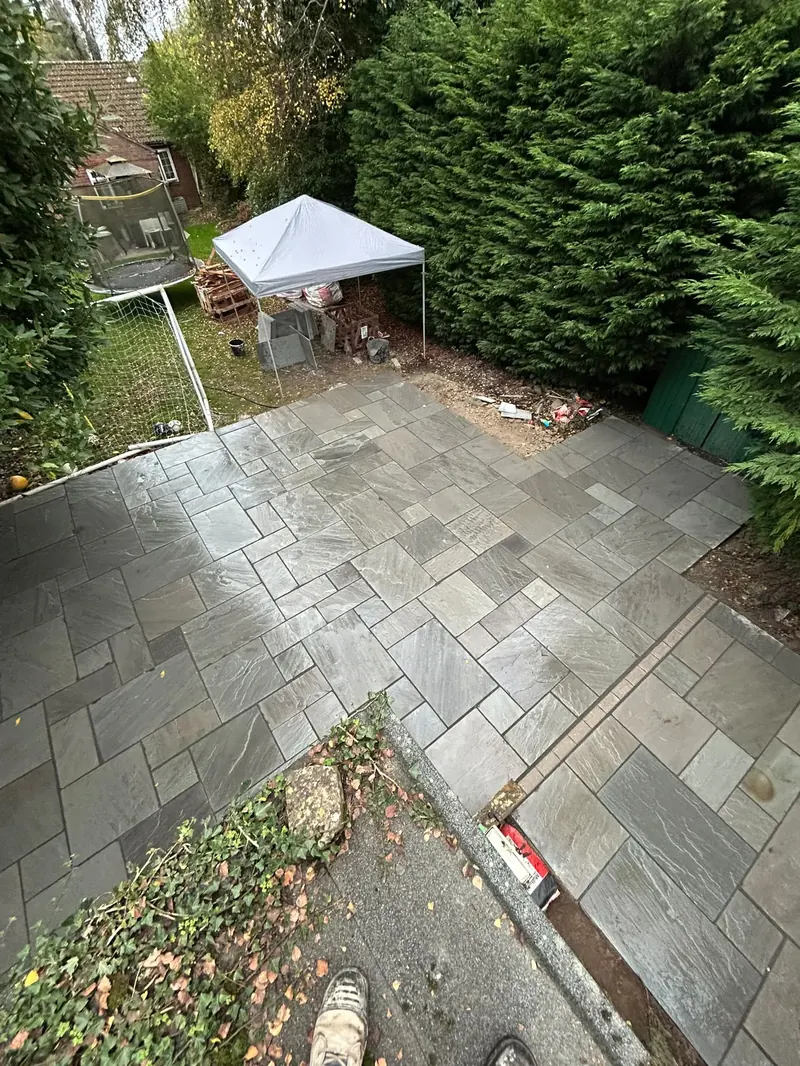
A geotextile woven membrane goes down before the hardcore, letting water pass through while stopping weeds and growth pushing up from underneath. On a full-size patio, that can mean around 11 tonnes of type 1 hardcore going in, compacted in layers to create a genuinely solid base to build on, not just a token sub-base.
Slabs are laid on a full contact sharp sand and cement bed, and every slab is primed with a slurry first to get proper adhesion between the stone and the bed underneath. That's the difference between a patio that stays flat and tight for years and one that starts rocking and letting weeds through within a couple of seasons.
Once everything is laid, the whole area is washed down and pointed, either with a brush-in resin jointing compound or a traditional sand and cement pointing, depending on the finish you want.
As with every job, materials (MOT type 1 hardcore, sharp sand, cement, membrane, edging, sandstone paving, pointing compound) are priced separately from labour and charged at trade cost. You'll see both figures before anything starts.