
Begin with daily life
Consider play, pets, shade, seating, footfall and how often the garden is used. Those details give more useful direction than choosing a product from a small sample alone.

Choose a lawn for how you live
A lawn should suit the way the garden is used—not just the way it looks on installation day. Whether turf or artificial grass is the better fit comes down to everyday use, maintenance expectations, levels and preparation.

The practical benefit
A lawn should suit the way the garden is used—not just the way it looks on installation day. Whether turf or artificial grass is the better fit comes down to everyday use, maintenance expectations, levels and preparation.
What to consider
Consider play, pets, shade, seating, footfall and how often the garden is used. Those details give more useful direction than choosing a product from a small sample alone.
Turf can be a great fit where a living lawn and seasonal care suit the household. Establishment, sunlight, drainage and expected wear all influence how it will look and feel over time.
Artificial grass can offer a consistent finish in the right setting, but it still relies on suitable preparation and drainage. It should be chosen because it supports the garden’s use, not because it is assumed to solve every problem.
Put the guide into practice
Explore HSH’s lawn and garden-base service for preparation-led planning around levels, drainage and the intended use of the space.
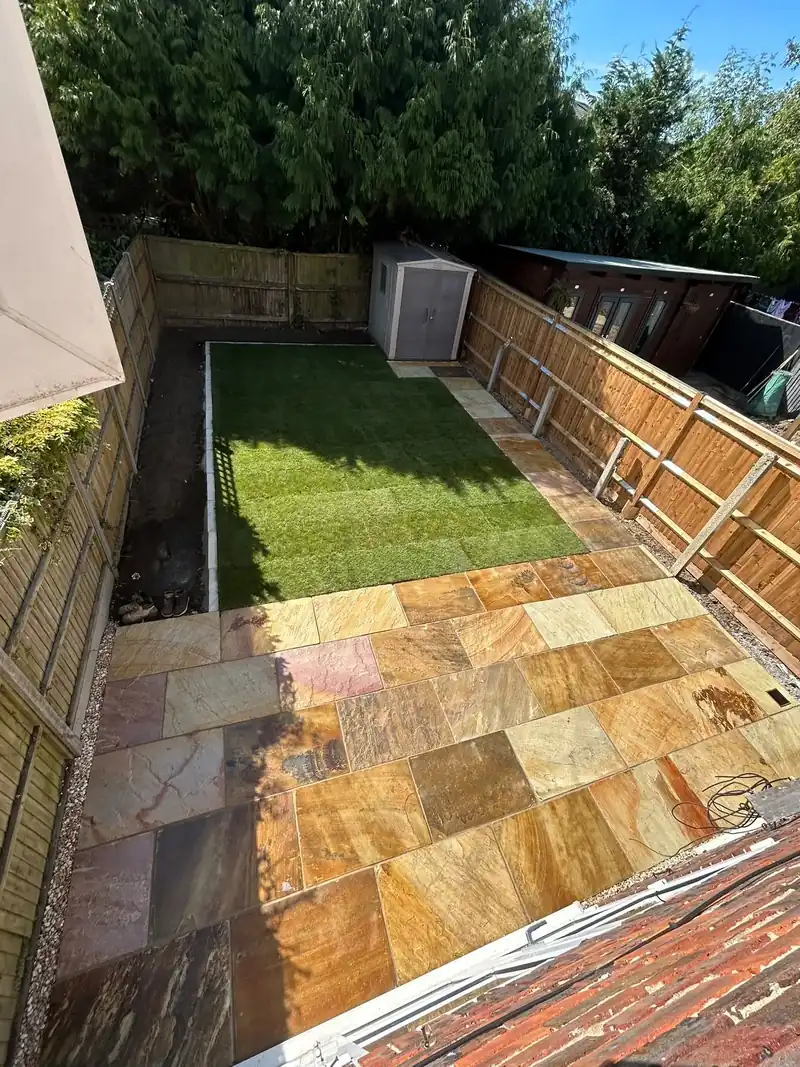
Before choosing a lawn finish
Look at the garden through a typical week rather than its best sunny hour. Notice where shade sits, where children or pets run, whether football, dining or a washing line changes the available space, and where soil becomes worn or wet. Those observations help clarify whether you want a softer natural lawn, a highly consistent surface or a mixed layout with paving and planting doing some of the work.
Be honest about maintenance too. Turf is a living surface and benefits from the right establishment and care. Artificial grass can reduce some routine jobs, but it is not a substitute for planning drainage, levels or a clean join to surrounding paving. Both surfaces look better when the garden’s edges, paths and thresholds are considered at the same time.
It can be useful to sketch the garden roughly and mark the areas that need to stay clear: shed doors, seating, routes, drains and planting beds. That sketch gives a more productive starting point for HSH’s turf, artificial grass and garden-bases service. The aim is not simply to cover soil; it is to create a garden that remains useful from the house to the far corner.
Ready for a useful conversation?
Send Harry the postcode area, what you want to achieve, approximate dimensions and a few photographs if you have them. The site, access and connected features can then be considered properly.