
Follow the everyday journey
Think about bins, bikes, shopping, garden equipment and the route people naturally take. A path should support those movements rather than forcing an awkward detour across lawn or loose ground.
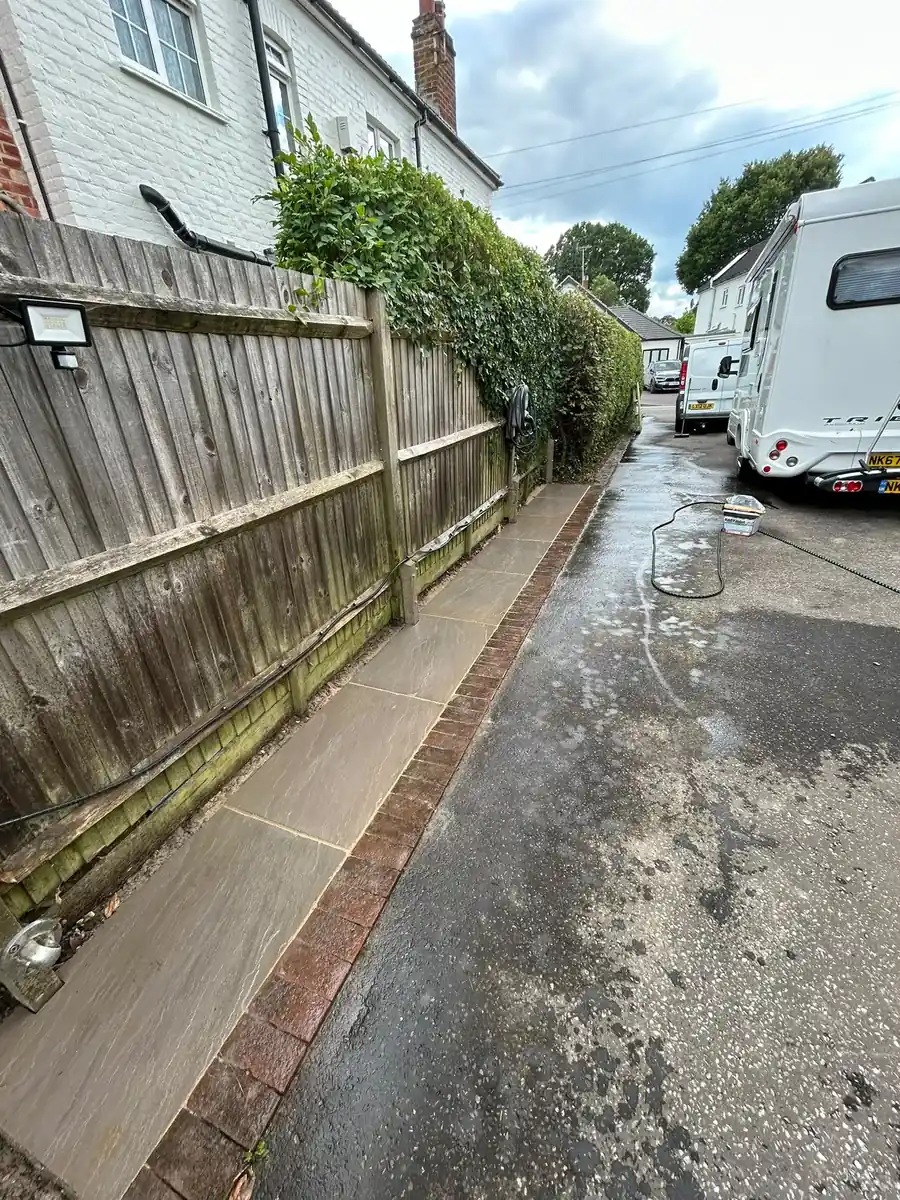
Make the garden easier to move through
A path is often the most used part of a garden. A clear, well-planned route can make everyday jobs easier, reduce muddy shortcuts and give people a more confident way to move between the house, gate, shed and outdoor spaces.
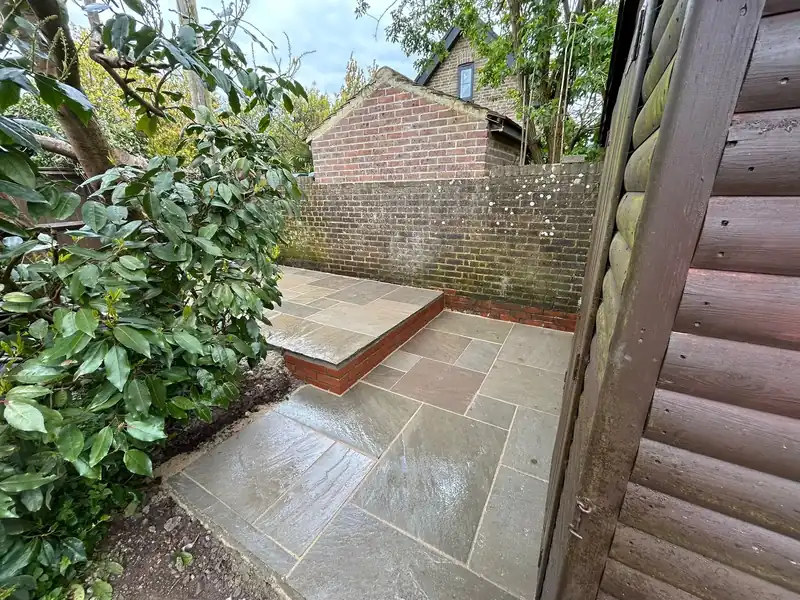
The practical benefit
A path is often the most used part of a garden. A clear, well-planned route can make everyday jobs easier, reduce muddy shortcuts and give people a more confident way to move between the house, gate, shed and outdoor spaces.
What to consider
Think about bins, bikes, shopping, garden equipment and the route people naturally take. A path should support those movements rather than forcing an awkward detour across lawn or loose ground.
Thresholds, adjacent paving and drainage should be considered together. This is what helps a path feel deliberate and avoids sending water towards the wrong place.
Natural stone and other appropriate non-resin surfaces can create very different results. Width, use, access and the surrounding property all help determine the sensible option.
Put the guide into practice
Explore HSH’s pathway service for practical route planning, appropriate non-resin surfaces and levels that connect the garden.
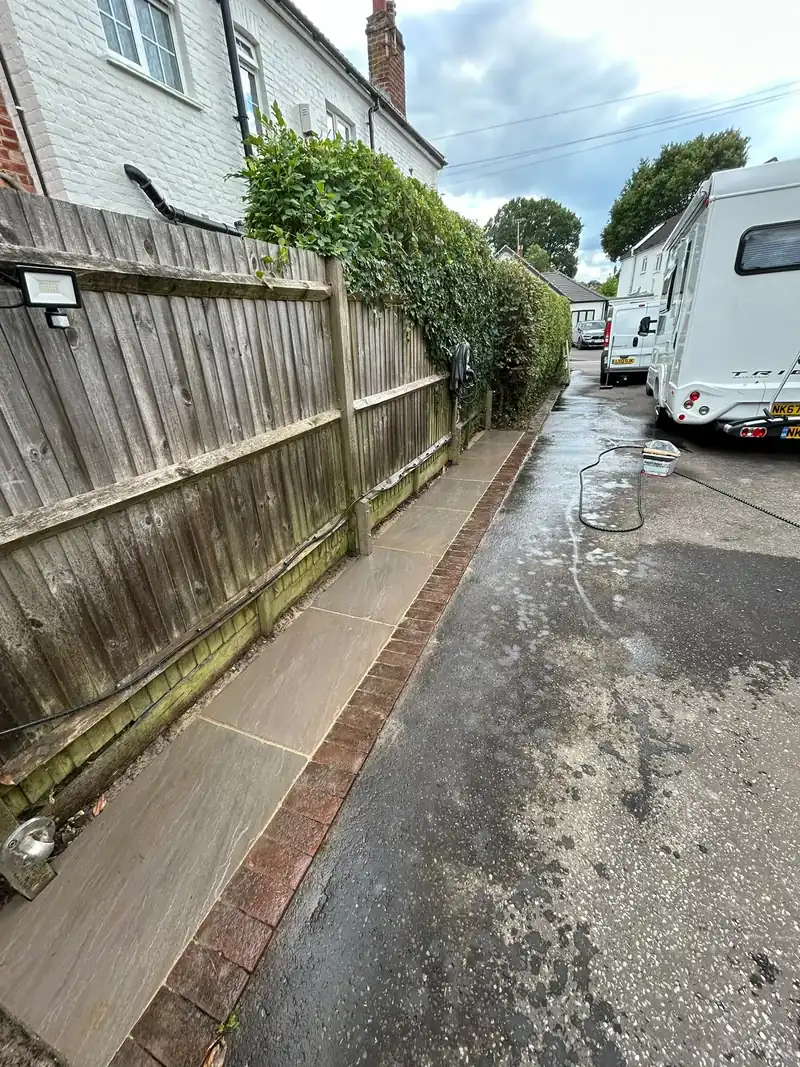
Before planning a new route
Take the usual route through the garden while carrying something you use often: a bin bag, watering can, bike or garden equipment. Notice where the ground becomes narrow, slippery, muddy or awkward near a door. These are the details a new path should solve. They also help establish whether the route needs to be wider, straighter, better drained or more clearly connected to a patio or gate.
Look at what happens at either end of the path. A good surface can still feel wrong if it stops at a raised threshold, meets a lawn without an edge or sends water towards the house. Steps, drains, existing paving and door clearances are all part of the same practical question: how will people and water move through this area once the project is complete?
Photographs taken after rain can be particularly useful, as can a note of the garden’s approximate levels. You do not need to diagnose the solution yourself; you simply need to show what is happening now. HSH can then discuss driveways and pathways in the context of access, material choice and the rest of the garden, rather than treating the route as an isolated strip of paving.
Ready for a useful conversation?
Send Harry the postcode area, what you want to achieve, approximate dimensions and a few photographs if you have them. The site, access and connected features can then be considered properly.