

Reviewed by Harry Smith-Haggett, HSH Services · 11 August 2026
The quick answer
Choose sandstone when natural variation, a softer traditional character and an often lower initial material cost matter most, and you are comfortable with a porous surface that may need more ongoing care. Choose outdoor porcelain when you prefer consistent colour, crisp edges and lower porosity, especially for a contemporary layout or a garden where easier routine cleaning is important.
Neither material is automatically the best. The garden's shade, drainage, doors, levels, intended use, surrounding brickwork and your tolerance for maintenance all matter. So does installation. A premium slab on weak preparation is still a weak patio.
| Decision | Sandstone | Porcelain |
|---|---|---|
| Appearance | Natural variation; each slab is individual | Controlled colour and consistent printed faces |
| Porosity | Porous; absorbs more moisture | Very low porosity |
| Maintenance | Usually needs more cleaning and care | Generally easier to keep clean |
| Cutting | Natural variation can be forgiving | Dense material needs suitable cutting equipment |
| Initial material cost | Often lower, product dependent | Often higher, product dependent |
Appearance and the character of the garden
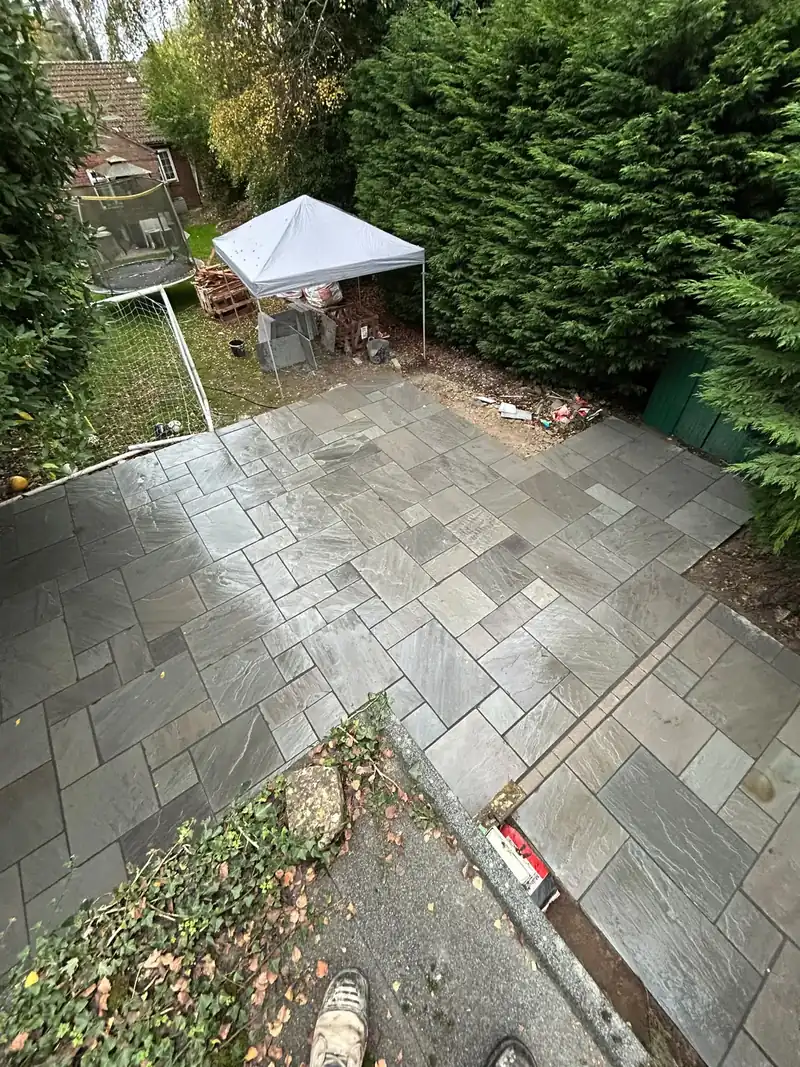
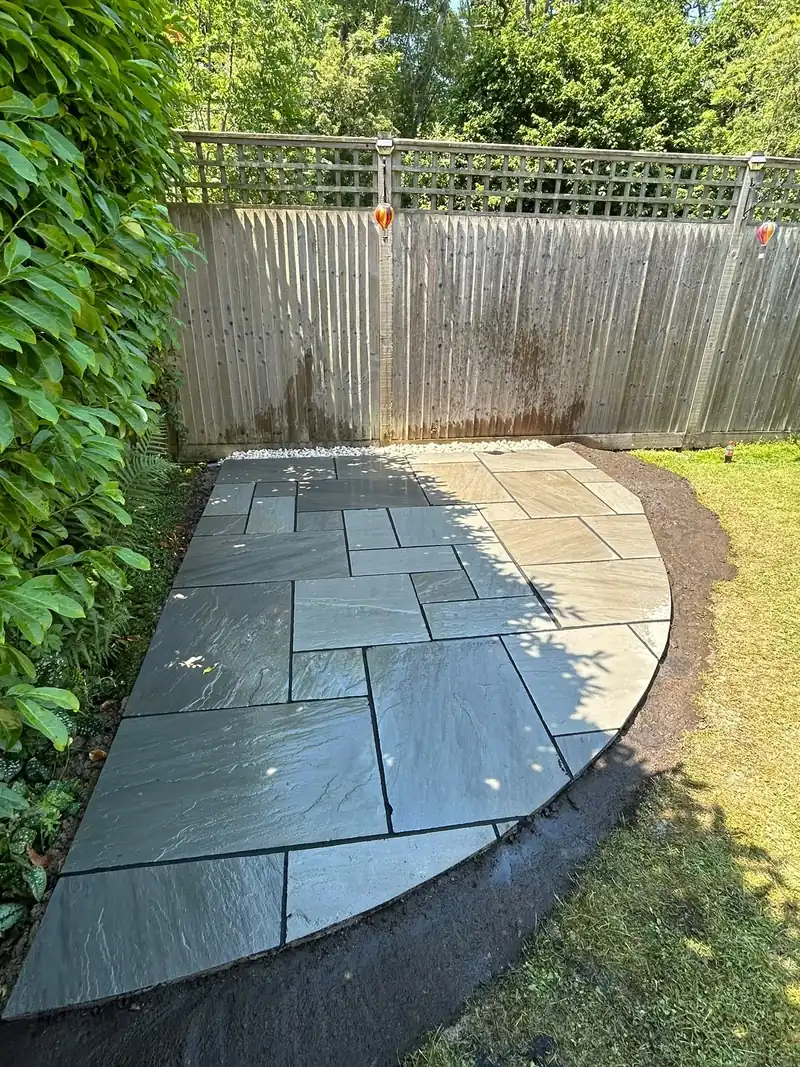
Sandstone is a natural material. Variation in colour, texture, veining and thickness is part of its appeal rather than a manufacturing defect. A mixed-size project pack can create an informal rhythm that works well beside brick homes, lawns, established planting and gardens where a perfectly uniform grid would feel too hard.
Porcelain is manufactured for consistency. It can deliver a cleaner, more architectural look with calibrated thickness and precise edges. Modern porcelain may imitate stone, timber or concrete, but repeated print faces and the sharpness of the layout still create a more controlled result. That can work beautifully beside contemporary extensions and minimal planting.
Ask to see more than one sample. A single slab does not show the range in a sandstone pack, and a small porcelain sample may not show the pattern repetition across a large patio.
Maintenance, moisture and shade
Sandstone absorbs moisture more readily than porcelain. In shaded or damp positions that can make algae, moss and staining more noticeable if the surface is not cleaned and cared for. The exact behaviour varies by stone, aspect, drainage and surrounding trees. Some owners enjoy the way natural stone weathers; others want the patio to remain visually consistent.
Porcelain's low porosity helps it resist absorption and makes routine cleaning easier. That does not make it self-cleaning. Organic growth, dirt and residues can still reduce appearance and grip, particularly where water sits or sunlight is limited.
Before choosing, think honestly about maintenance. If you prefer the natural variation of sandstone, allow for the care it needs. If low absorption is the priority, porcelain deserves serious consideration even if the initial material cost is higher.
Installation and the work beneath the slab
Both materials need correct excavation, a stable compacted sub-base, suitable falls and a full-contact mortar bed for a rigid patio system. Spot bedding leaves unsupported voids and is not HSH's working method.
Priming matters. Manufacturer guidance commonly requires a slurry primer on porcelain, and it is recommended or required for many natural-stone products too. Porcelain is dense and needs the right blade, technique and care when cutting. Sandstone varies naturally, so sorting slabs and planning colour distribution are part of creating a balanced finish.
Joints and edges must suit the paving system. Narrow porcelain joints and more variable natural-stone joints call for different setting-out and jointing choices. Steps, drainage channels, inspection covers and borders should be planned before laying begins.
Initial price versus whole-project value
It is tempting to compare only the square-metre price of slabs. That misses most of the decision. Excavation, waste, access, membrane, sub-base, mortar, primer, cutting, edge restraints, steps, drainage and jointing may represent a larger share of the finished project than the difference between two paving packs.
Sandstone can offer strong initial value and a distinctive finish. Porcelain can justify a higher material cost where its consistency and lower porosity reduce the maintenance burden you care about. HSH explains raw material costs without adding a hidden markup, so the comparison can be based on the products and work actually proposed.
Manufacturer guidance used to check this page includes Bradstone's material comparison and Marshalls' paving material guidance. Product-specific instructions take priority for the selected slabs.